

Conservatory in Welford-on-Avon:
Turning a Conservatory into a Year-Round Room
There is a lot to love about a conservatory. All that glass gives you wonderful views of the garden, floods the room with daylight and creates a space that feels very different from the rest of the house.
Unfortunately, all that glass can also be its biggest weakness.
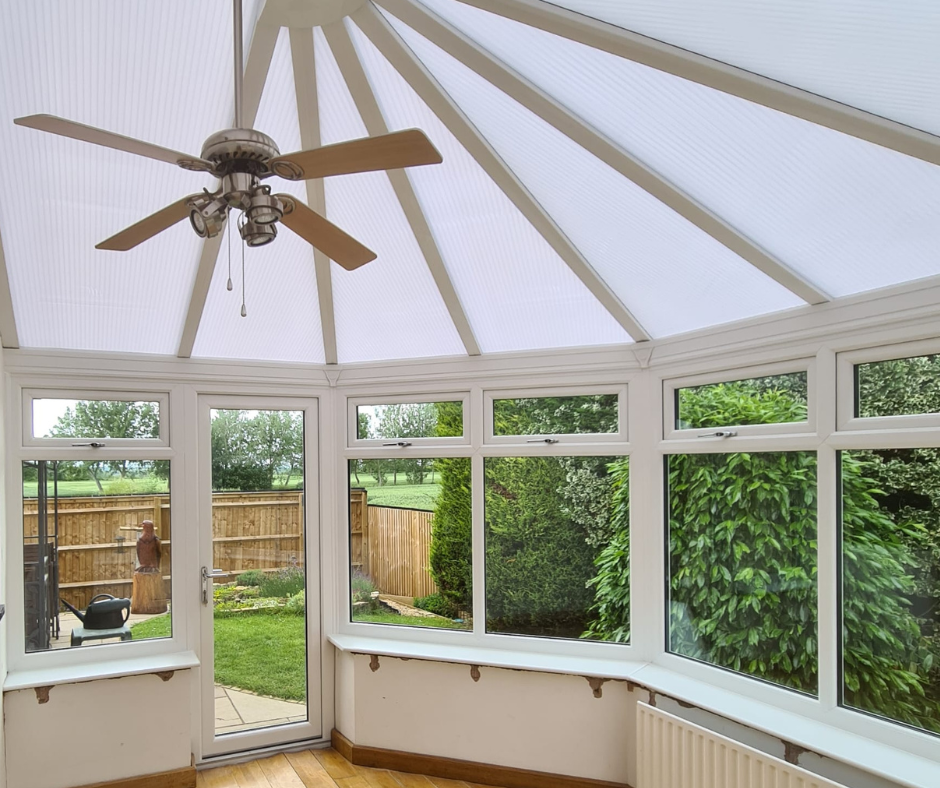
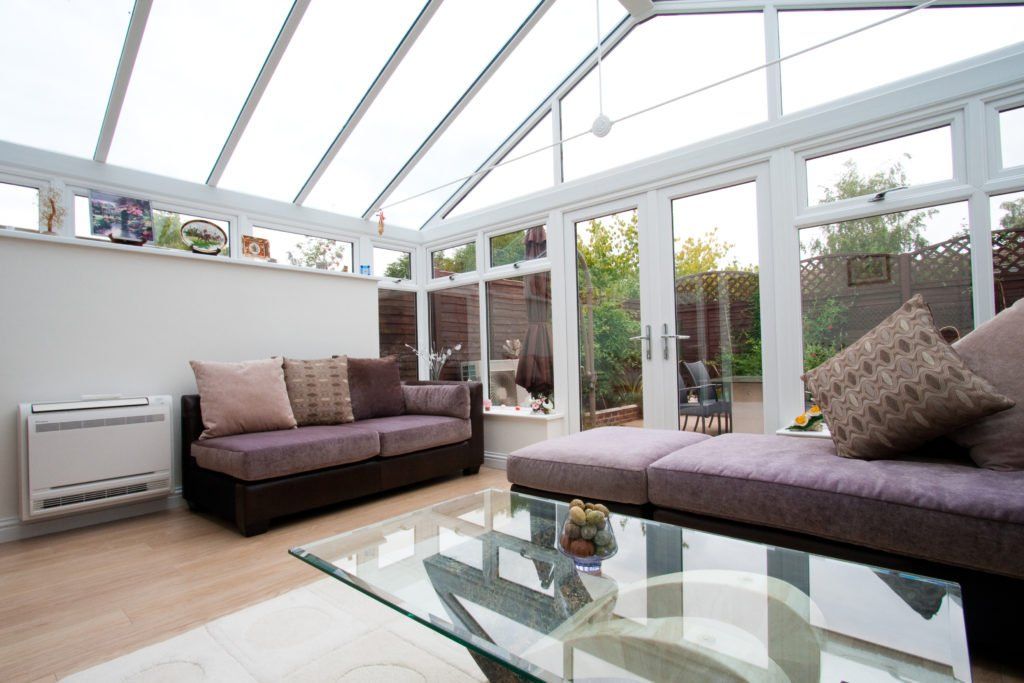
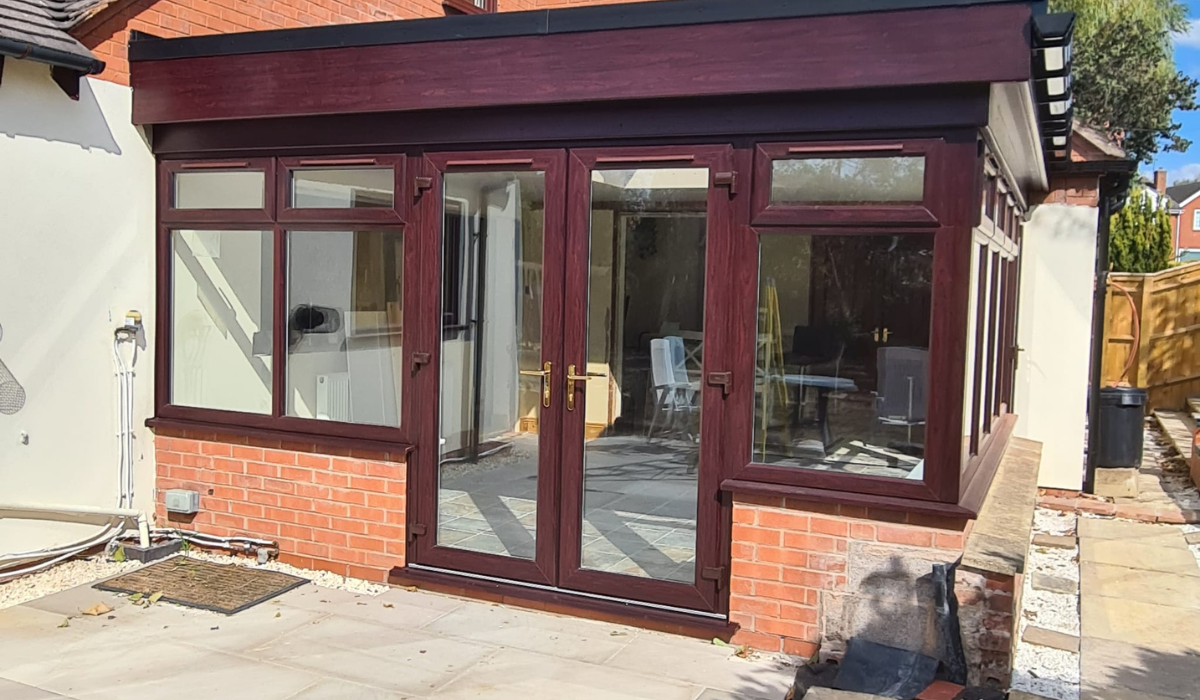
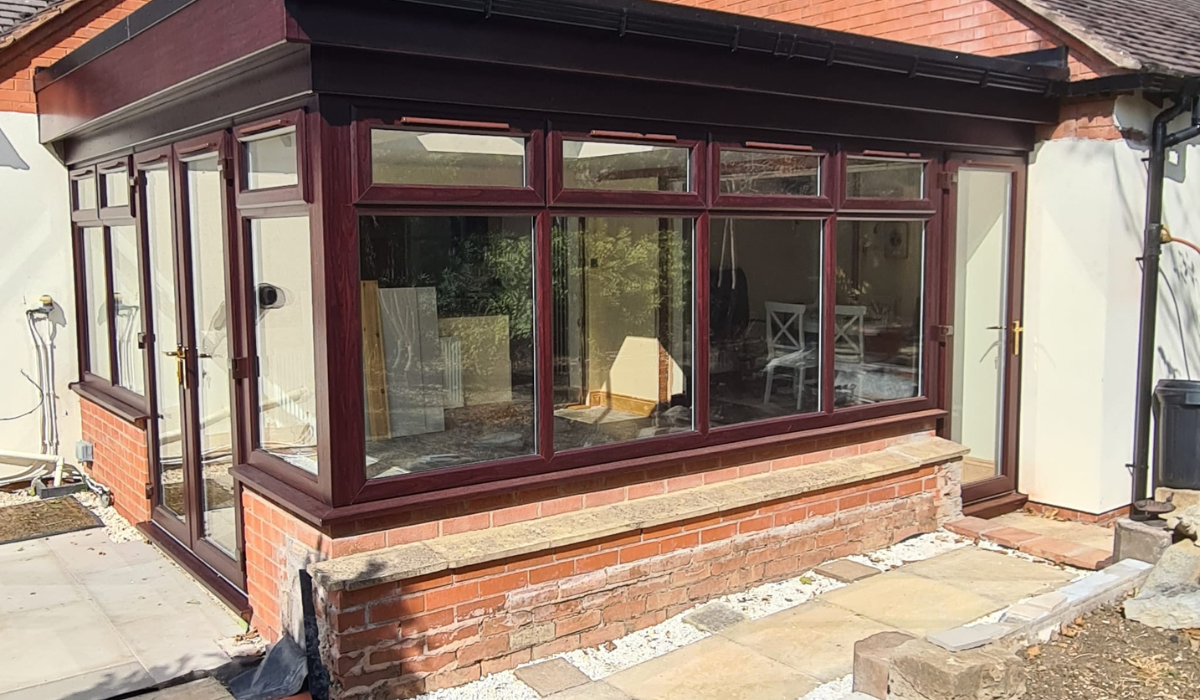
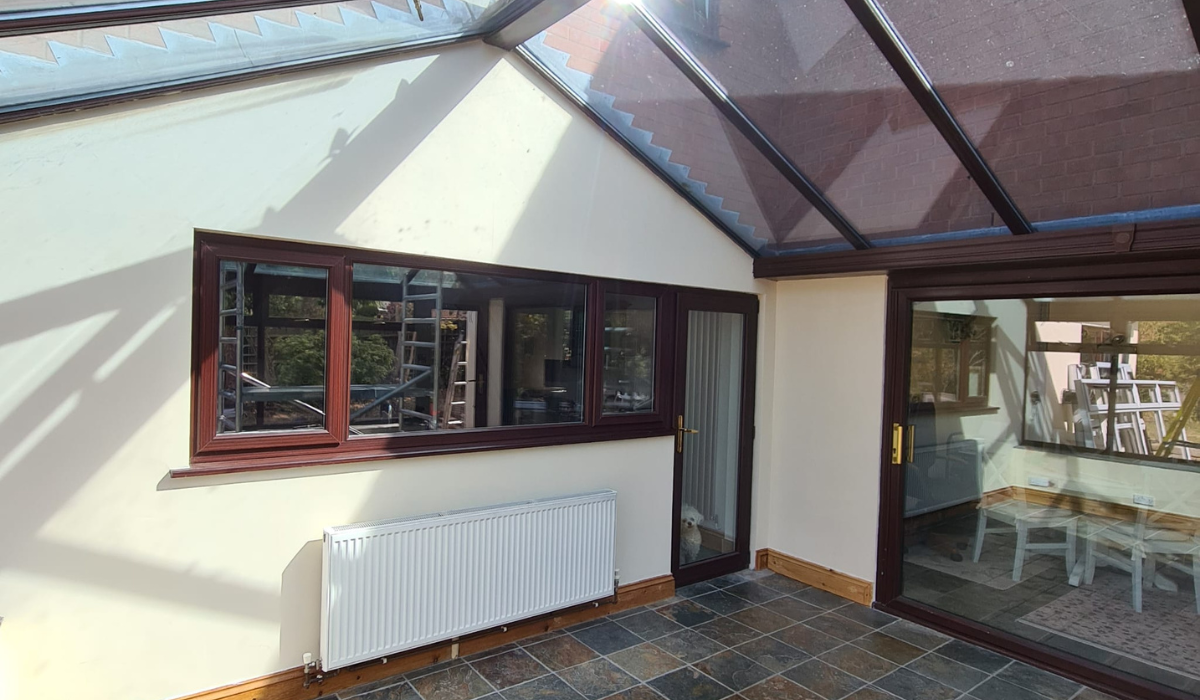
This conservatory in Welford-on-Avon is a great example. The size was good, the existing base and slate floor could be retained and there was glazing all around looking out onto the garden. The opportunity was to make the room far more comfortable and usable throughout the year.
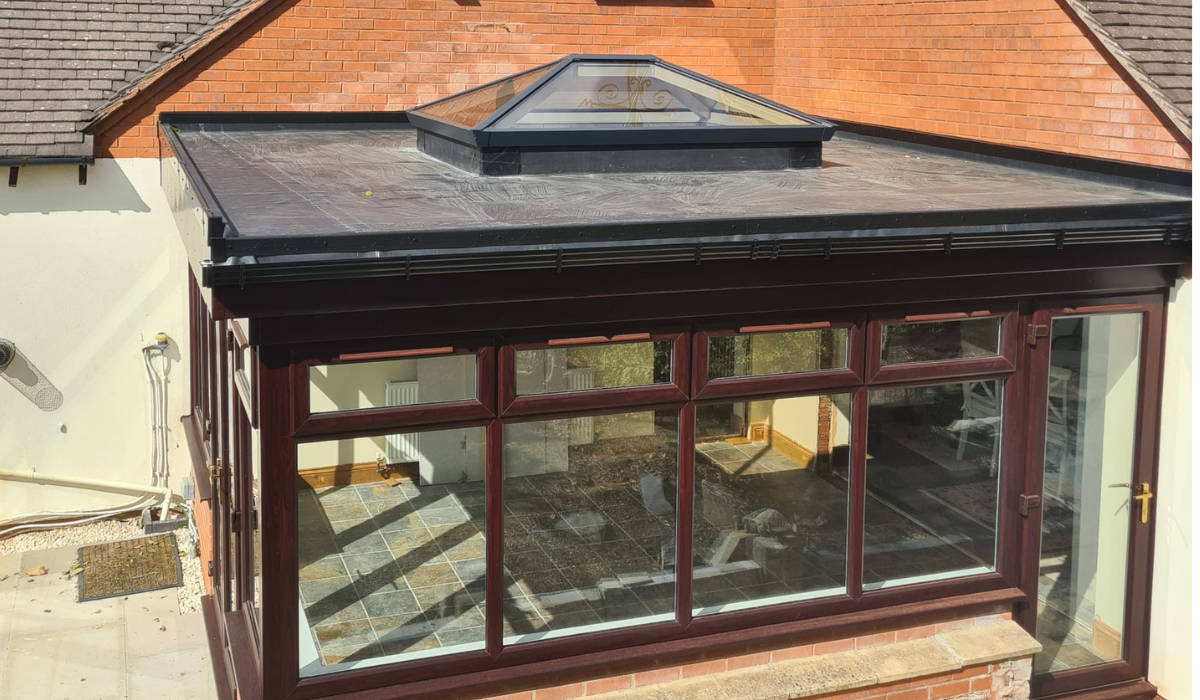
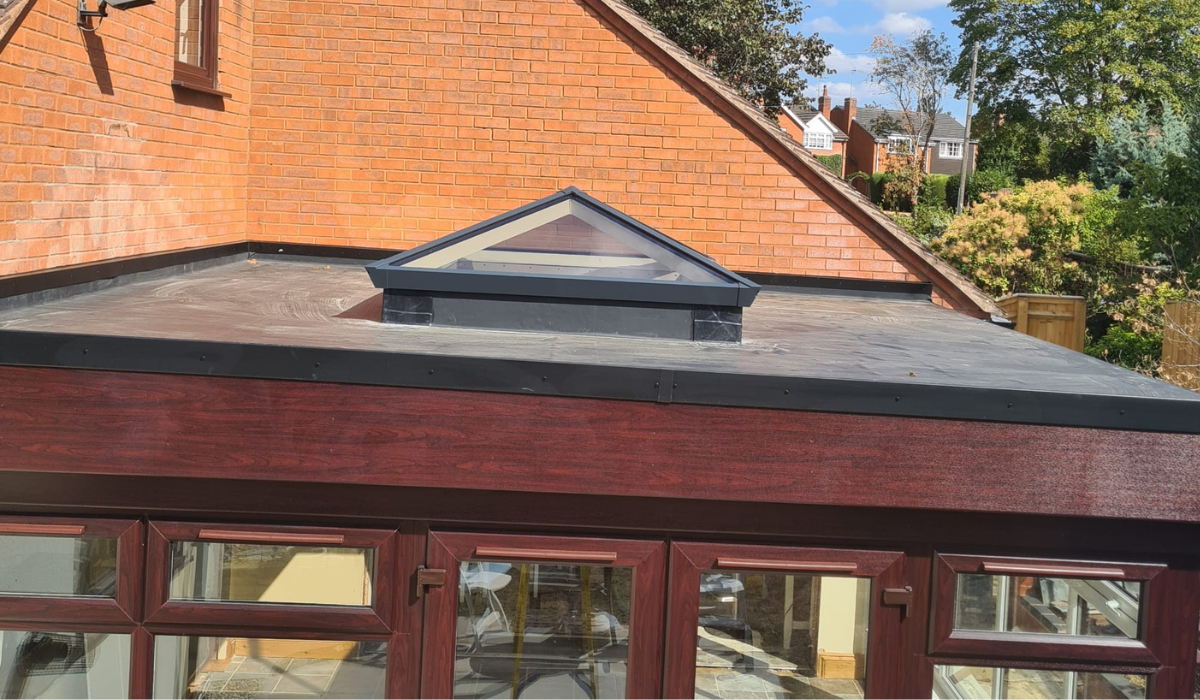
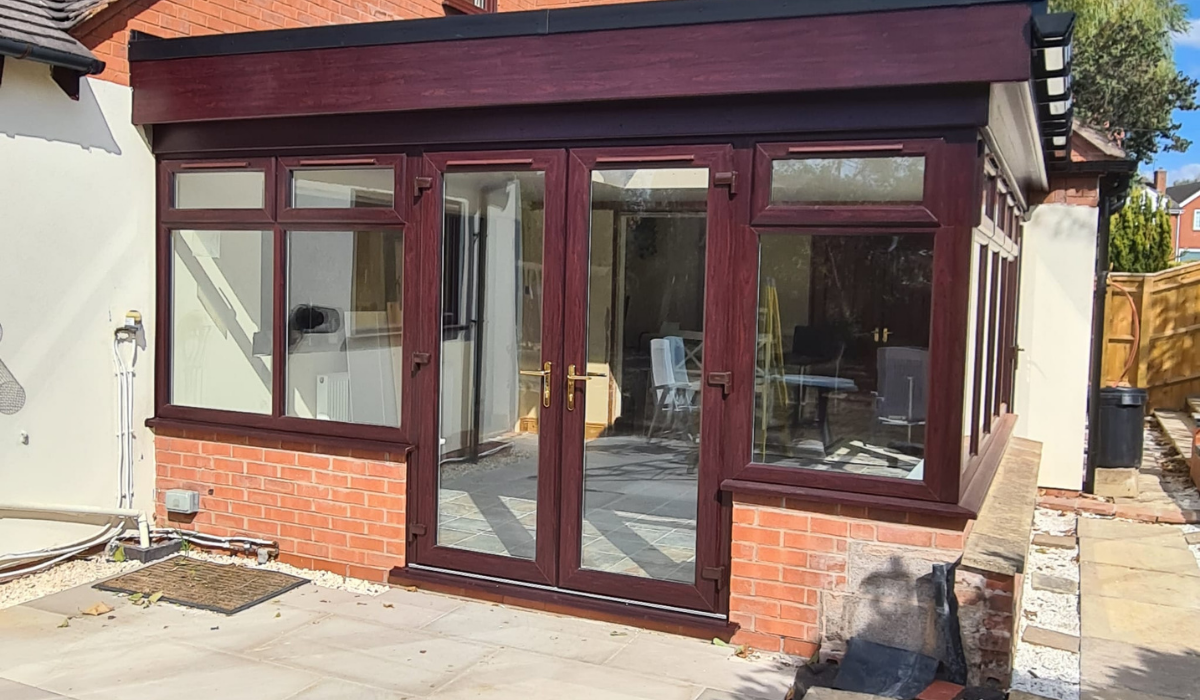
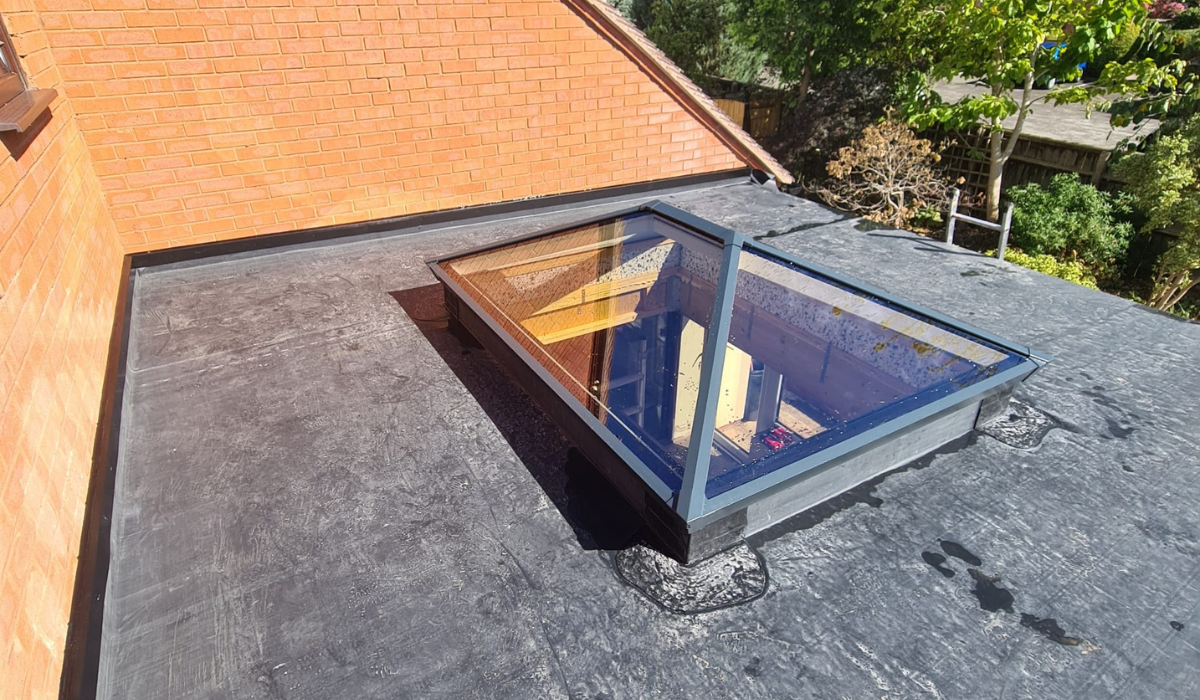
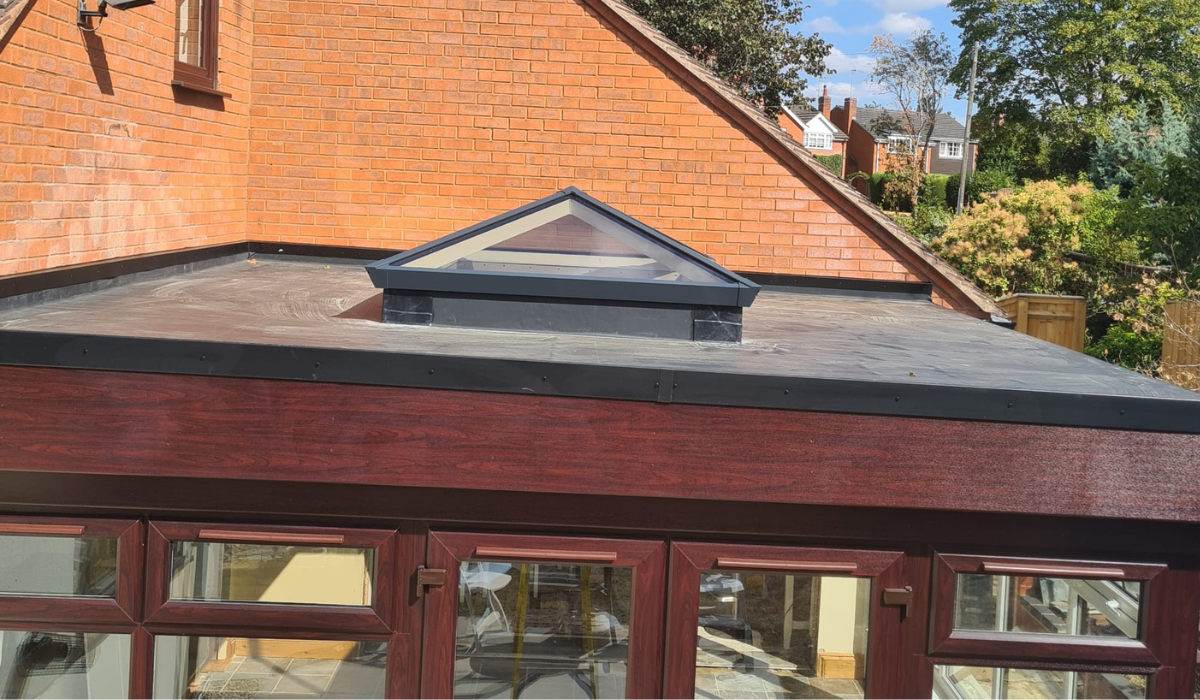
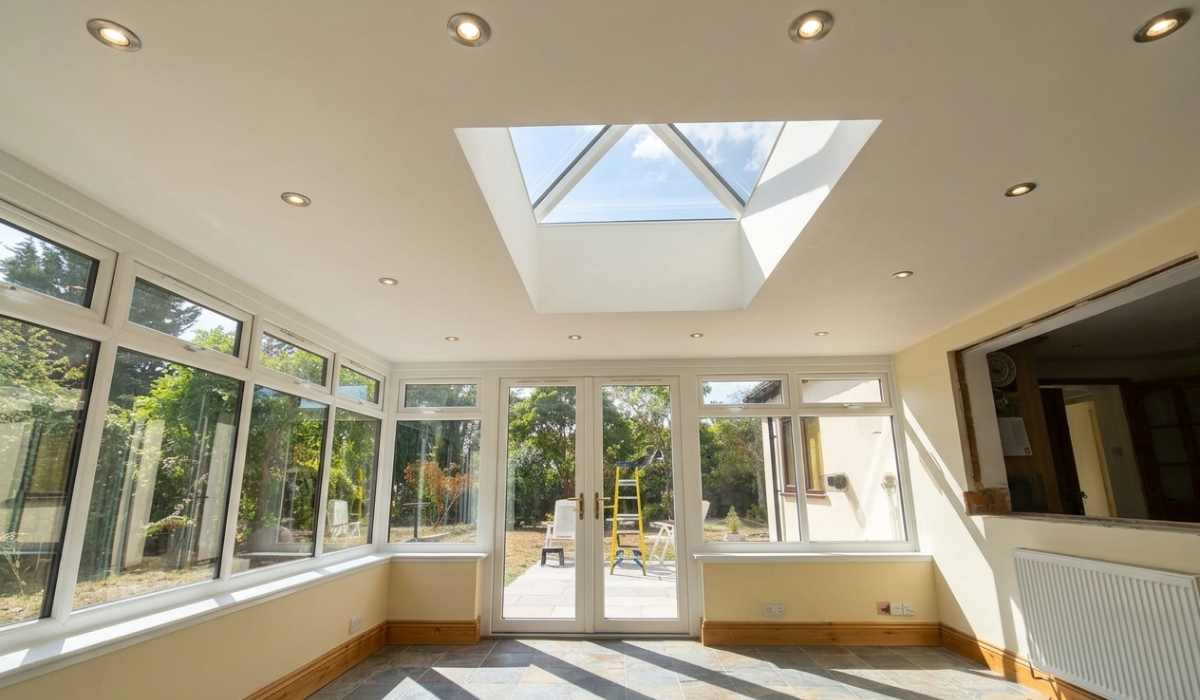
The answer was to transform it into a modern orangery, replacing the fully glazed roof with an insulated flat roof, light pelmet and central roof lantern.
Why Change a Traditional Conservatory?
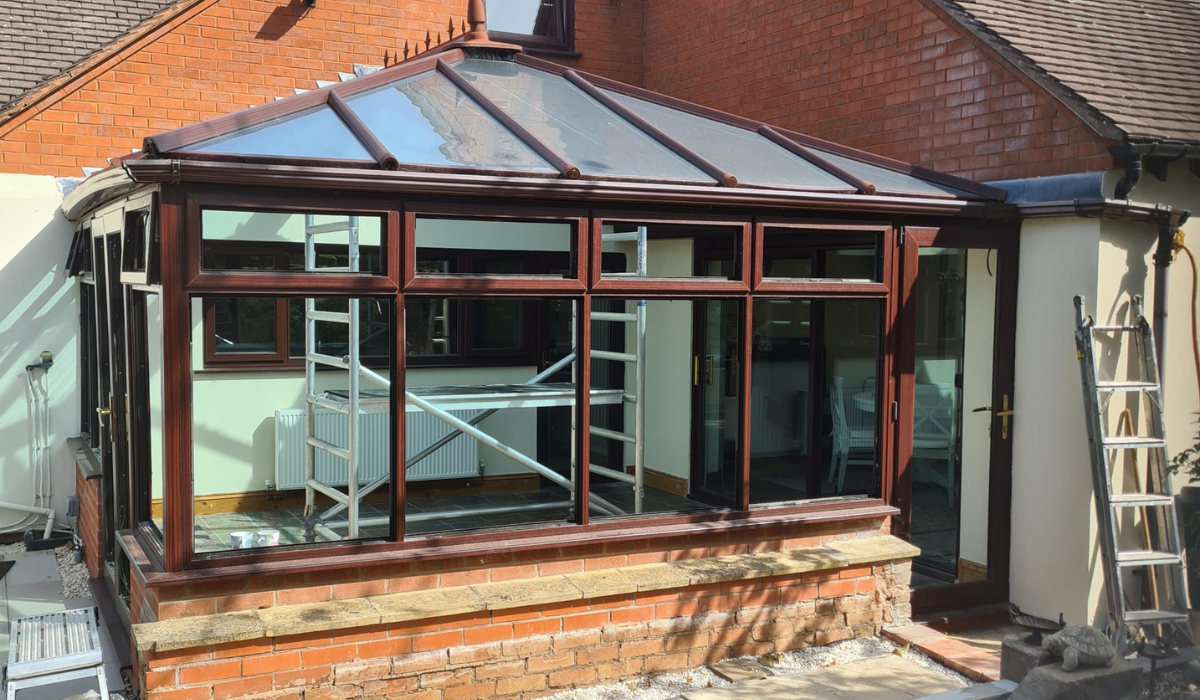
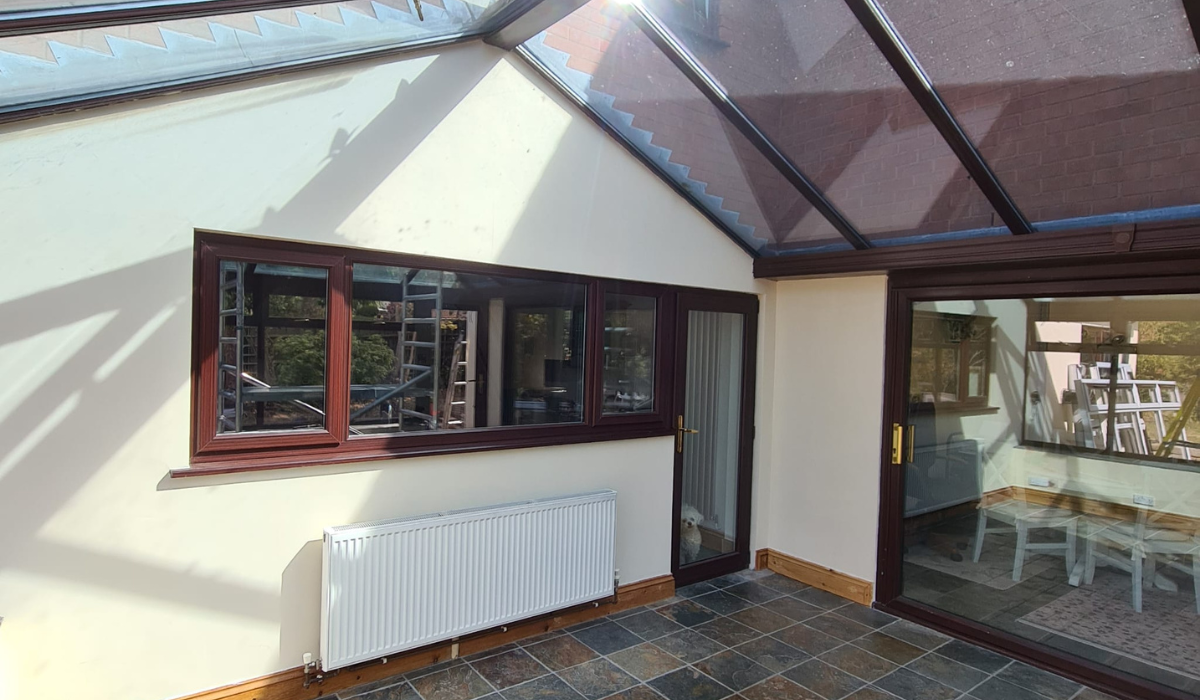
Modern conservatory glazing performs considerably better than the glass and polycarbonate used in many older conservatories. If you are building a new conservatory today, improved glazing, insulated frames and solar-control glass can all make a significant difference.
There is still one fundamental issue with a traditional conservatory design: there is an enormous amount of glass.
On a bright summer day, sunlight can enter through the roof as well as the windows, quickly increasing the temperature and creating glare. That can make the room uncomfortable for relaxing and particularly difficult if you want to use it as a home office, where direct sunlight on a computer screen can become a real nuisance.
During winter, that large expanse of glazing also loses heat more readily than a well-insulated solid roof.
For some people, that is a perfectly acceptable trade-off. They want a very light, predominantly glazed garden room and expect to use it more at certain times of the year.
If you want the space to function as an everyday room, an orangery-style design can make much more sense.
What Does an Orangery Roof Change?
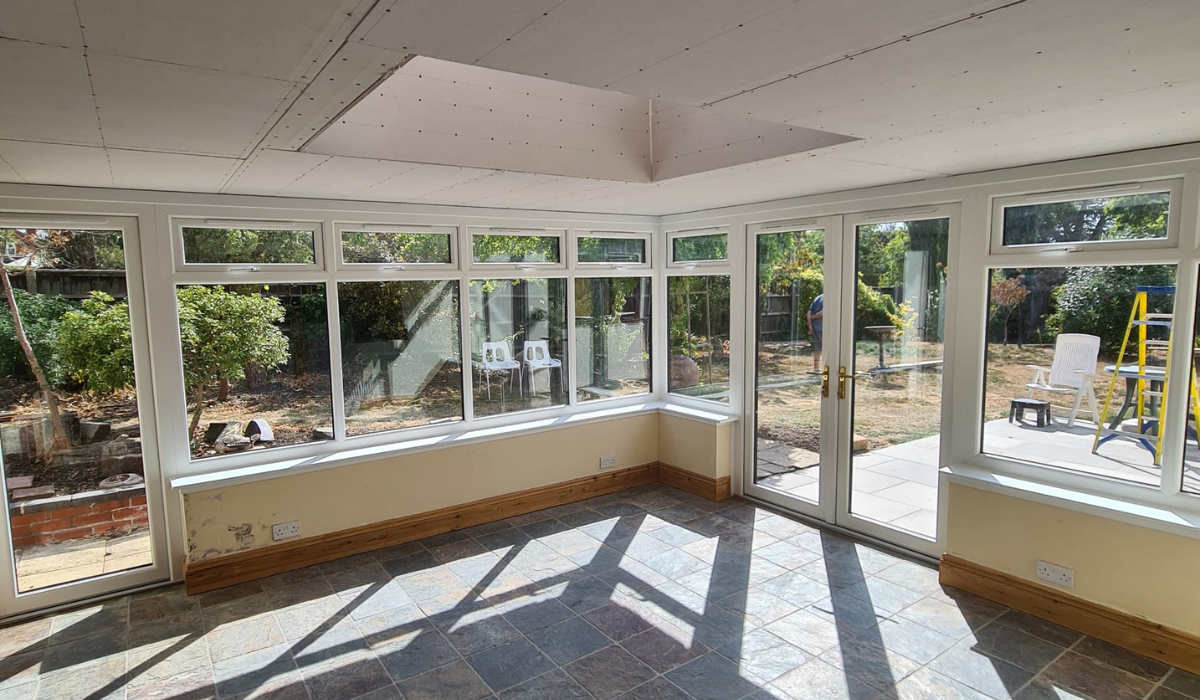
Look at the photographs of this Welford-on-Avon project and one of the biggest differences is the balance between glass and solid construction.
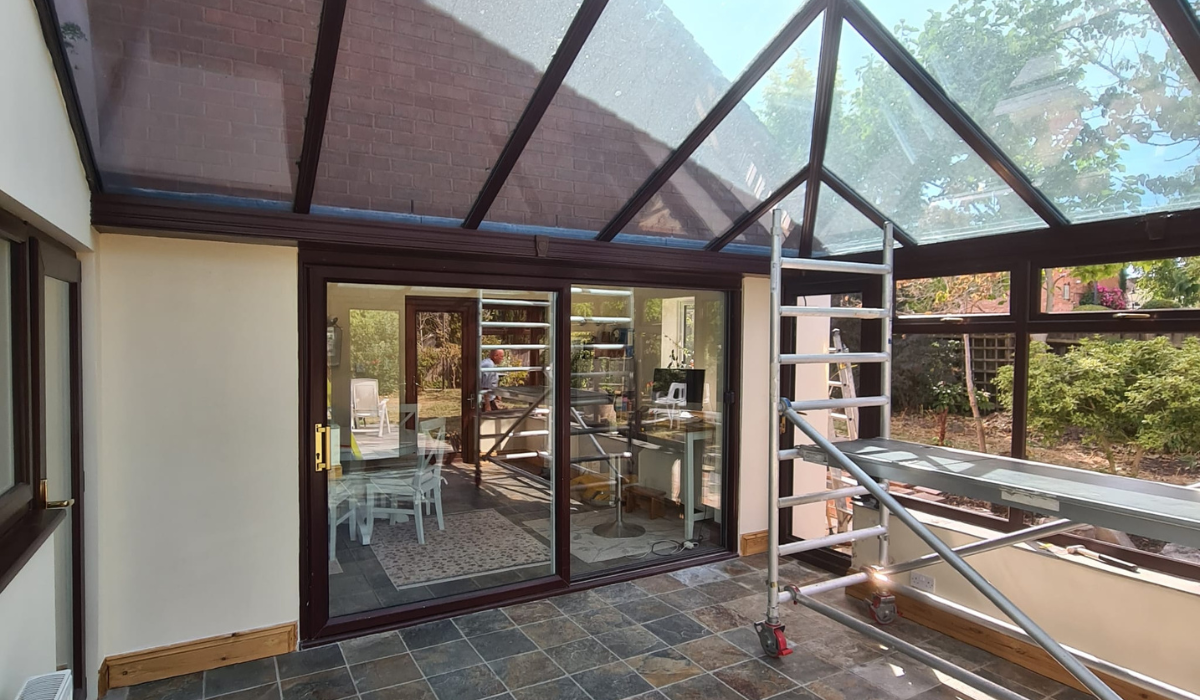
We haven't lost the connection with the garden. There is still extensive glazing around the sides of the room, so when you are sitting inside you can see straight out into the garden.
The major change is above you.
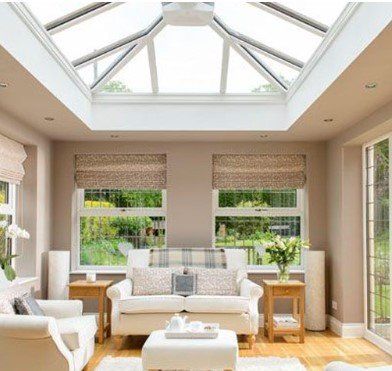
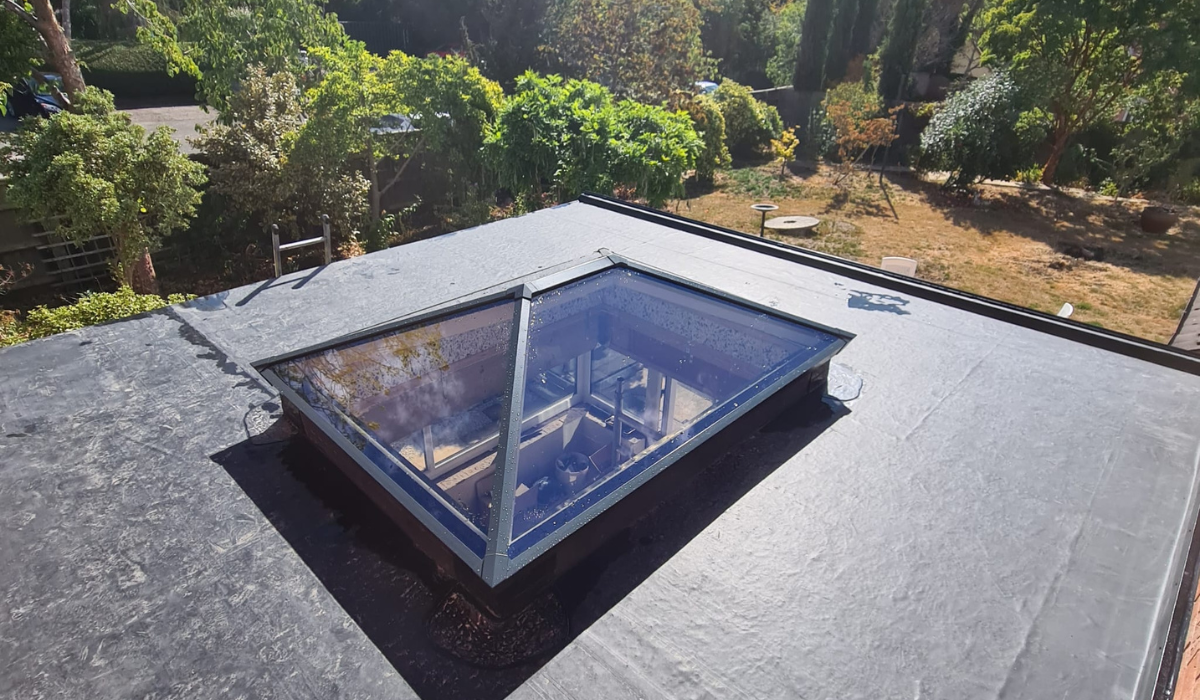
Instead of an entire roof made from glass, there is now a highly insulated flat roof surrounding a central glazed lantern. Inside, this creates a substantial ceiling and light pelmet around the perimeter of the room.
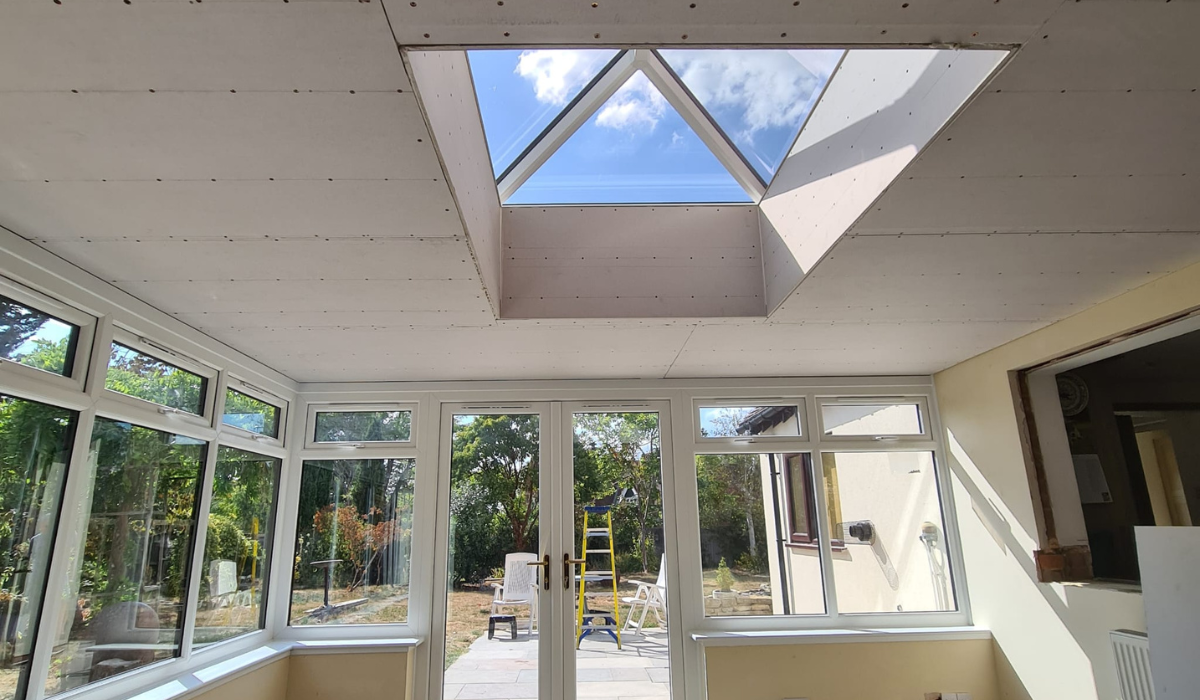
You still get natural light from above, including that lovely view of blue sky through the lantern, while reducing the sheer quantity of overhead glazing.
That balance can make the room much easier to live with.
A Conservatory That Feels More Like a Room
This is where an orangery really comes into its own.
A traditional conservatory often feels like a separate space attached to the house. An orangery has more of the characteristics you expect from an interior room, with a substantial ceiling, better insulation and somewhere to incorporate lighting.
That opens up far more possibilities for how you use it.
It could become a dining room, sitting room, playroom or a home office that you actually want to work in throughout the year. You can arrange furniture as you would in any other room while still having all those windows connecting you to the garden.
For anyone working from home, that combination is particularly attractive. You get daylight, garden views and a feeling of openness without sitting underneath a complete glass roof for eight hours a day.
Why Keep a Roof Lantern?
If reducing the amount of overhead glass has so many advantages, why have a roof lantern at all?
Because natural light is still an important part of what makes these rooms special.
The lantern concentrates the overhead glazing in the centre of the room. It brings daylight deep into the space and prevents a large flat roof from making the interior feel enclosed.
You can see the effect particularly well in this installation. Sunlight from the lantern reaches across the room and onto the slate floor, while the solid sections of roof provide areas of shade.
It is a very different quality of light from being surrounded by glass on every surface.
Keeping the Best Parts of the Existing Conservatory
Another important part of this project was deciding what didn't need changing.
The existing base was suitable for reuse and the slate floor was retained. There was little sense in removing perfectly usable parts of the conservatory simply for the sake of starting again.
Reusing an existing conservatory base isn't possible in every case. Its construction and condition need to be assessed, particularly when the new roof and structure will be different from the original.
Where it is suitable, it can reduce the amount of building work required and allow you to put more of the project budget into the parts that will make the greatest difference.
In this case, the familiar footprint and slate floor remain, while the room above them has been completely transformed.
Conservatory or Orangery: Which Is Better?
There isn't one answer for every home.
A modern conservatory remains a great choice if your priority is maximum daylight and you love the feeling of being almost outside. Today's glazing and roofing options make new conservatories considerably more comfortable than many of their older counterparts.
An orangery design offers a different balance.
You retain plenty of glass and the views that connect the room with the garden, while introducing more insulated solid construction. The room can feel more substantial, more like part of the house and more suitable for everyday use throughout the seasons.
It is worth thinking about how you actually want to use the space rather than simply deciding whether you prefer the appearance of a conservatory or an orangery.
If it is somewhere you intend to work, eat, relax or spend several hours every day, comfort throughout the year becomes particularly important.
Updating a Conservatory in Welford-on-Avon
If you already have a conservatory in Welford-on-Avon that is too hot, too cold, too bright or simply isn't being used as much as you expected, replacing it completely isn't your only option.
At Prior Products, we can look at the structure you already have and advise on what can realistically be retained. Depending on its condition, that could mean keeping the existing base, floor or other elements and redesigning the conservatory around them.
This Welford-on-Avon project kept the things that were already working and changed the part that made the biggest difference.
The result is still a wonderfully light room surrounded by the garden. It is now a room designed to be lived in all year round.
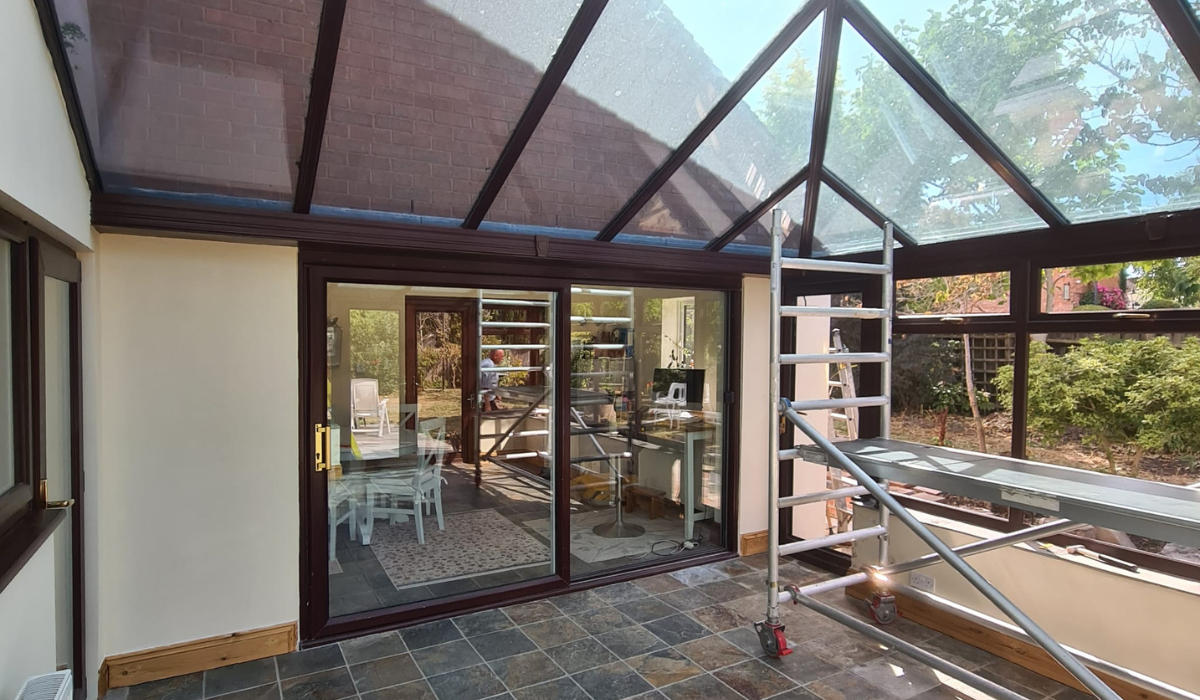
Plastered ceiling in new conservatory.
It's rare for us to see a finished conservatory. After we've finished our work, the plasterers and electricians come in. It takes a while for the plaster to dry, and then the customer will decorate and then furnish. So unless we are invited back, we rarely see the finished product.
One of the best things about a new solid roof conservatory is the plastered ceiling, which makes the conservatory feel like a room just like the others in the house.
We've used technology to show how this new conservatory could look when the ceiling is finished. You have to admit, it looks amazing. Light-filled due to the lantern but sheltered enough to work on a screen, watch TV, and feel cosy in the evenings.
You might also be asking whether it's a conservatory or an orangery. We would call it an orangery-inspired conservatory. Typically, an orangery would have a wall between the windows. We have used the existing walls, which had windows all the way round.
The other design feature typical of an orangery is a light pelmet that goes around the perimeter with a much bigger lantern. This means you still may have too much light to use as an office.
We've used a flat roof with a smaller lantern for the best of all worlds. More economical, more useable in all seasons and still feels like a proper room.
Want to see what we could do for your conservatory? Give us a call to book your free home visit. 01789 720222
Home Improvements in Welford-on-Avon
Alongside composite doors, we also provide a full range of home improvement services in Stratford-upon-Avon, including:
- Double glazing replacement and upgrades
- Conservatory roof replacements, including solid tiled systems and glass roofs
- Conservatory refurbishments and modernisation
- Bifold doors and large glazing solutions
- Roofline products, including fascias, soffits and guttering
- Garage doors and side entrance doors
These improvements are designed to increase comfort, improve energy efficiency, and modernise the appearance of homes across Stratford-upon-Avon and the surrounding area.